Pink Fire Pointer insects | About of Animals and Pictures
Showing posts with label insects. Show all posts

Super power


These photos of red ants, also knows as fire ants, make the little
insects look like they are performing a circus act. They balance giant
seed pods from a Mimosa tree above their heads. In an amazing show of strength,
they also move into different gravity-defying shapes as they carry
their food back to the nest for the rest of their hungry ant pals.


Photos: Eko Adiyanto / Caters News Agency


See more photos

Lunch time?

Would you eat this?


 A caramelized locust is used to decorate a cake
made of insects at the University of Wageningen. 


How about this?


  A cupcake made of insects.


 Research
by scientists at the university showed that insects could provide the
best source of protein to meet the needs of a rising population.
Currently, 70 percent of agricultural land is used for livestock
production.


REUTERS/Michael Kooren


Source

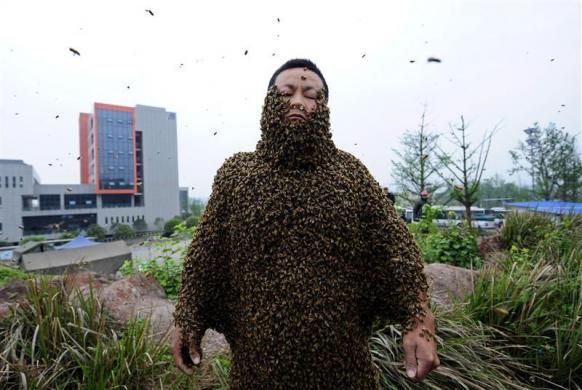
A bee - utiful new World Record


Beekeeper She Ping is covered with bees during a
challenge to break the world record in Chongqing Municipality, April
18, 2012. 


She Ping, 32, broke the world record  by covering
his body with 33.1 kilograms of bees (about 331,000 bees), overtaking
the last world record of 26.8 kilograms of bees which was attempted by a
Jiangxi province beekeeper Ruan Liangming in 2008..


REUTERS/China Daily


Source

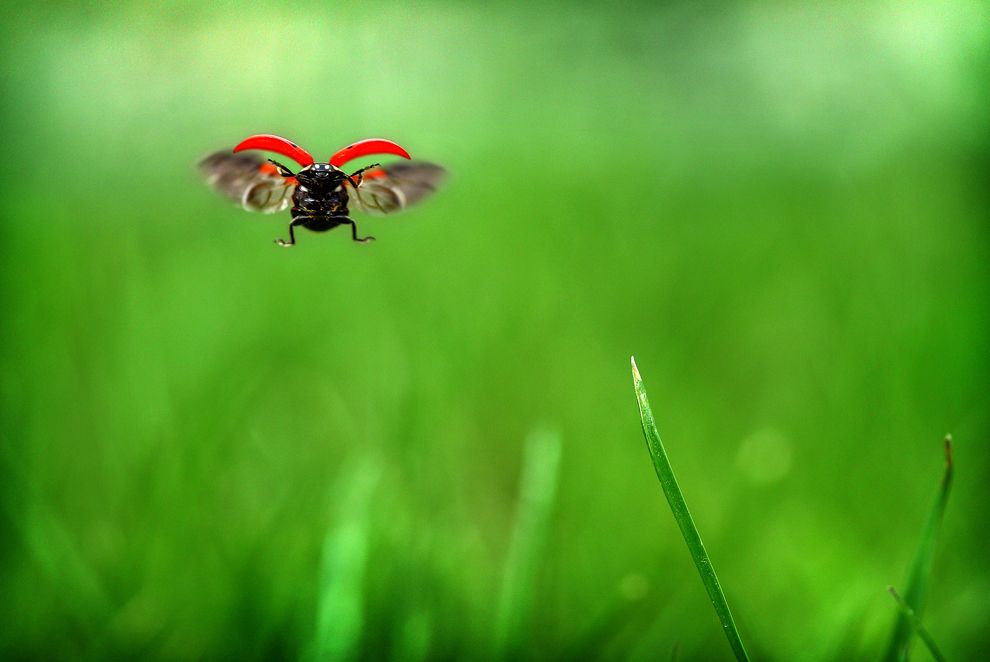
Landing


Photo: Jeff Horner/Walla Walla Union-Bulletin/Associated Press


Source

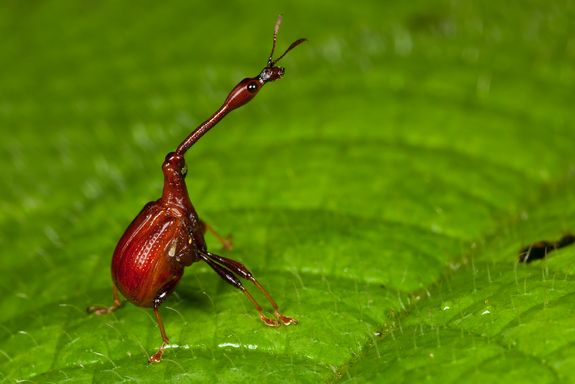
Can you guess what this is?

The giraffe weevil (Trachelophorus giraffa) is a weevil endemic to Madagascar. It derives its name from an extended neck much like that of the common giraffe. The extended neck is an adaptation that assists in nest building and fighting.


Credit: Liew Weng Keong | Shutterstock


Source

Studies find pesticides tied to collapse of bee colonies

Honey bee populations have been crashing around the world in recent years, and pesticides have been suspected, along with other potential factors such as parasites, disease and habitat loss, in what's known as Colony Collapse Disorder. In the U.S., some beekeepers in 2006 began reporting losses of 30-90 percent of their hives.


Two recently released studies found that a widely used crop pesticide first introduced in the 1990s has caused significant changes to bee colonies worldwide and removing it could be the key factor in restoring nature's army of pollinators.


The scientists behind the studies called for regulators to consider banning the class of chemicals known as neonicotinoid insecticides. In the U.S., the Environmental Protection Agency told msnbc.com that the studies would be incorporated into a review that's currently underway.


Source

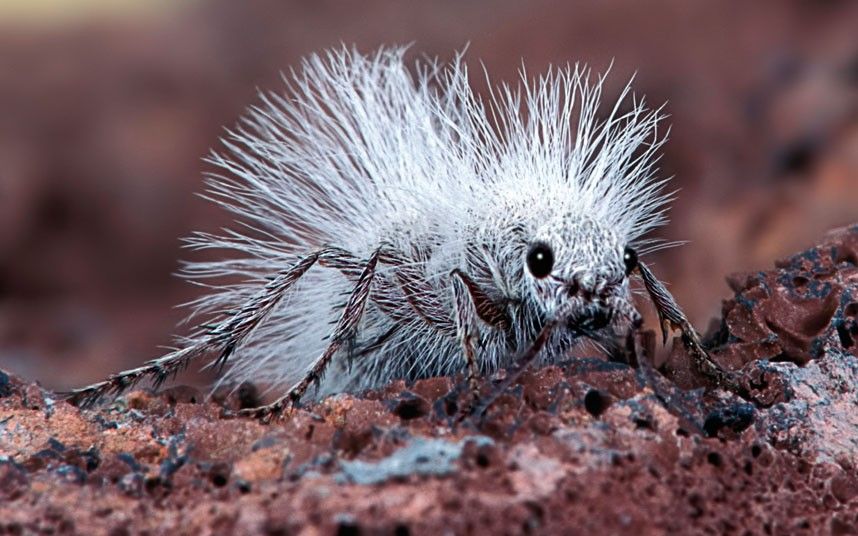
Can you guess what this is?

A Thistledown Velvet Ant, also known as a Cow Killer, is seen in the Mojave Desert, California. It isn't really an ant, but a wingless female wasp. This photograph was taken by Robert Jensen after his son Chris found the unusual insect wandering around on the desert floor. The female wasp is about 2cm long; the males are much smaller and have wings. Their sting can be quite painful.Picture: Robert Jensen/Solent News


Source

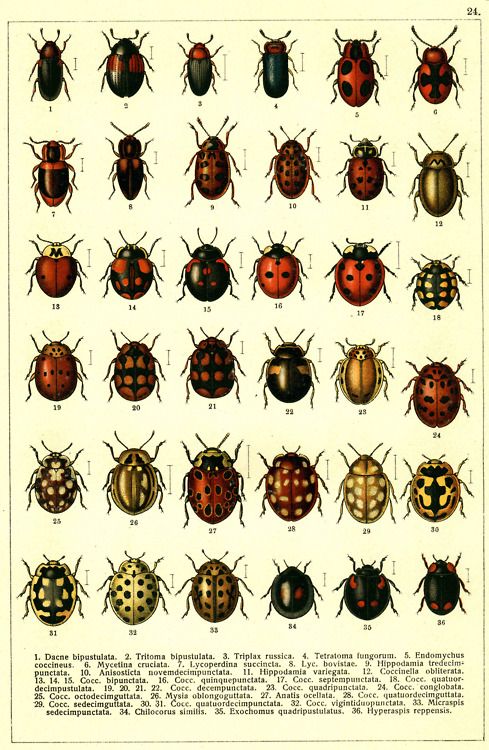
Pretty buggy

Georgiy Jacobson, Beetles Russia and Western Europe, (1905-15)


via

Too close for comfort?


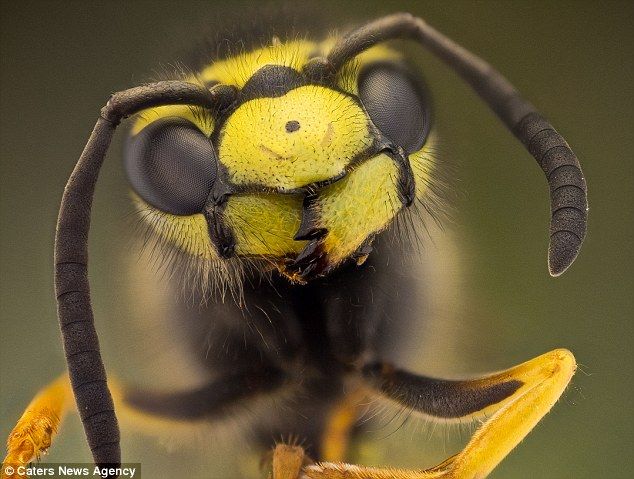
Amateur macro photographer Nicolas Reusens has amassed a huge series of insects from around the world - totalling over 100 images - over a three year period.

Each image takes Mr Reusens between 20 and a staggering 200 shots to compose through a complex process called stacking.

Source

365 New Species Spotted in Peru

Hundreds of species never before seen in a Peruvian national park have been found during an inventory of the Amazonian forests there, according to a conservation group.


The Wildlife Conservation Society (WCS) announced the discovery of 365 species previously undocumented in Bahuaja Sonene National Park in southeastern Peru. More than a dozen researchers inventoried the park's plant life, insects, birds, mammals and reptiles. The species found are known to exist elsewhere, but have never been seen inside Bahuaja Sonene.


The discovery included 30 undocumented bird species, including the black-and-white hawk eagle, Wilson's phalarope and ash-colored cuckoo. The survey also found two undocumented mammals — Niceforo's big-eared bat and the Tricolored Bat — as well as 233 undocumented species of butterflies and moths. This expedition was the first time that research of this scale has been carried out in Bahuaja Sonene National Park since it was created in 1996, according to the WCS.


Source

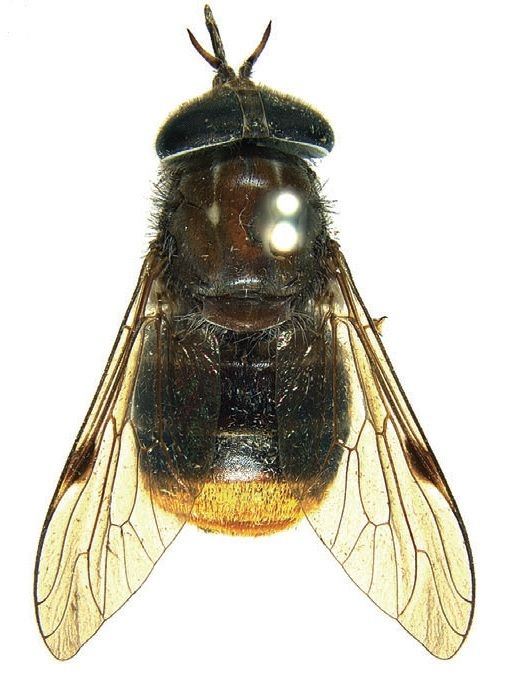
Bootylicious Fly

Beyoncé may be one of the biggest pop divas out there, but she isn't the only diva with that name. A previously un-named species of horse fly with a glamorous golden rear end has been named Beyoncé because it is "all time diva of flies." Beyoncé was a member of the group Destiny’s Child, which recorded the 2001 hit single, Bootylicious. The fly got its booty-ful name from its extreme diva feature: a big gold butt.
Source